The Laugavegur packing list: what you really need
A complete, tested packing list for the Laugavegur Trail, for hut hikers and campers: clothing, footwear, river-crossing gear, food and the small things people forget.
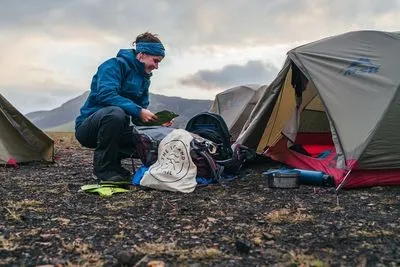
On the Laugavegur you’ll get sun, rain, wind, fog and possibly snow, sometimes in a single day. And there are no shops between Landmannalaugar and Þórsmörk. Pack for winter, hope for summer.
Clothing: the layer system
- Base layer: merino or synthetic top and leggings. No cotton: it stays wet and cold.
- Mid layer: fleece or light wool sweater.
- Insulation: light down or synthetic jacket for breaks and evenings.
- Shell: a really waterproof jacket with a hood, and waterproof trousers. Both are essential. Wind at Hrafntinnusker can be brutal.
- Hiking trousers (quick-drying) and possibly shorts for warm days in Þórsmörk.
- Hat, buff and gloves. Bring spare gloves; wet gloves are miserable.
- Socks: three to four pairs of hiking socks.
- Dry set for the evening: a set of clothes that never leaves your pack, so you always have something dry to sleep in.
Footwear
- Sturdy, waterproof hiking boots with ankle support and a good grip on snow and loose rock. Make sure they’re worn in.
- River shoes: sandals with a heel strap or light trail shoes, plus neoprene socks if you get cold easily. See river crossings.
- Hut shoes or flip-flops. Boots stay in the entrance of every hut.
- Optional: gaiters, against snow and the black sand of Mælifellssandur.
Sleeping
- Sleeping bag (compulsory in the huts, which provide no bedding). A comfort rating around 0 °C is fine for huts; campers need more warmth.
- Earplugs and an eye mask. Shared sleeping platforms, and it barely gets dark in early summer.
- Campers: a storm-proof tent, a sleeping mat with a good R-value, and a stove with fuel. Campers can’t use the hut kitchens. Read camping on the Laugavegur.
Navigation and safety
- Offline map or GPS track on your phone, plus a power bank. There is no power in the huts, and fog can hide the trail markers.
- Headlamp for August and September.
- First-aid kit with blister plasters.
- Trekking poles: very handy on the steep descent to Álftavatn and in the rivers.
- Emergency blanket and whistle.
- Save 112 and download the Safetravel app.
Food and water
- Food for every day of your trek, plus a spare day. Freeze-dried meals are light; the huts have stoves and pots.
- Snacks that don’t freeze or melt: nuts, chocolate, dried fruit.
- Water: you can usually refill at the huts and from clear streams. Avoid glacial (cloudy) water.
- A thermos for hot drinks during the day.
Small things people forget
- Cash and a card: card terminals in the highlands sometimes have no connection.
- Swimsuit for the hot spring in Landmannalaugar.
- Sunglasses and sunscreen: snowfields and long days.
- Rubbish bags. You must pack out your rubbish from Hrafntinnusker and Emstrur.
- Coins or a card for the (paid) showers.
Want to carry less?
On a self-supported trek your pack easily weighs 12–16 kg. Organised trips take a lot of planning off your hands, from hut bookings to transfers. The Iceland Trail is one operator that runs the Laugavegur with guided and self-guided options. Check what’s included before you decide how much you’ll be carrying.