Camping on the Laugavegur: rules, campsites and tips
Can you wild camp on the Laugavegur? Where the campsites are, what they cost in 2026, how to book and how to keep your tent standing in Icelandic wind.
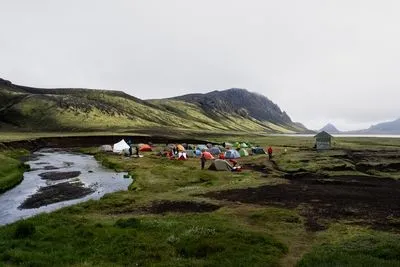
Camping is the budget-friendly way to hike the Laugavegur, and it gives you more flexibility than the huts. But it’s not a free-for-all: there are clear rules, and the weather will test your tent.
The rules
- No wild camping. On the Laugavegur you may only camp at the official campsites next to the huts. Pitching your tent elsewhere along the trail is not allowed. The area is fragile, and the rule is enforced.
- Booking is required. Since campsites count as accommodation, you need a reservation before you set out, just like hut guests.
- No hut kitchens. Campers can’t use the kitchens inside the huts. Bring your own stove, fuel, pot and cutlery.
- Pack out your rubbish. There are bins at Landmannalaugar, Álftavatn, Hvanngil and Þórsmörk, but not at Hrafntinnusker or Emstrur.
Campsites along the route
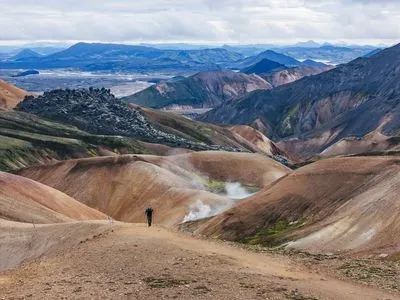
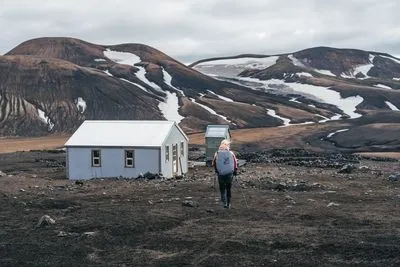
You’ll find campsites at every hut location: Landmannalaugar, Hrafntinnusker, Álftavatn, Hvanngil, Emstrur and the three areas in Þórsmörk (Langidalur, Básar, Húsadalur). Hrafntinnusker is high, cold and windy, often with snow on the ground. Many campers find it the toughest night of the trip.
What does it cost?
In 2026 camping at Ferðafélag Íslands sites cost about 3,400–3,600 ISK per person per night. Showers (where available) are charged separately. Compare that with 17,000 ISK for a hut bunk and it’s clear why many hikers camp.
Tent tips for Icelandic wind
- Bring a real mountain or 4-season tent with low, aerodynamic sides and a strong pole structure. Cheap festival tents won’t last.
- Pitch with the narrow end into the wind and use every guy line.
- Use rocks. The ground is often loose sand or gravel where pegs don’t hold. Weigh down the pegs and corners with stones (and put them back when you leave).
- Look for shelter behind walls, in hollows or near the hut, if allowed.
- Warm sleeping system: a sleeping bag rated around −5 °C and a well-insulated mat. The ground is cold, even in August.
Huts or tent?
| Hut | Tent | |
|---|---|---|
| Price per night (2026) | 17,000 ISK | ± 3,500 ISK |
| Pack weight | lighter | +3–5 kg |
| Comfort in a storm | high | low |
| Availability in peak season | scarce | easier |
| Kitchen | hut kitchen | your own stove |
A popular compromise is to sleep in the hut at Hrafntinnusker and camp everywhere else.